Ranjan Muthukrishnan
  • Home
  • Research Projects
  • CV
  • Contact
  • Home
  • Research Projects
  • CV
  • Contact
.

​What's new
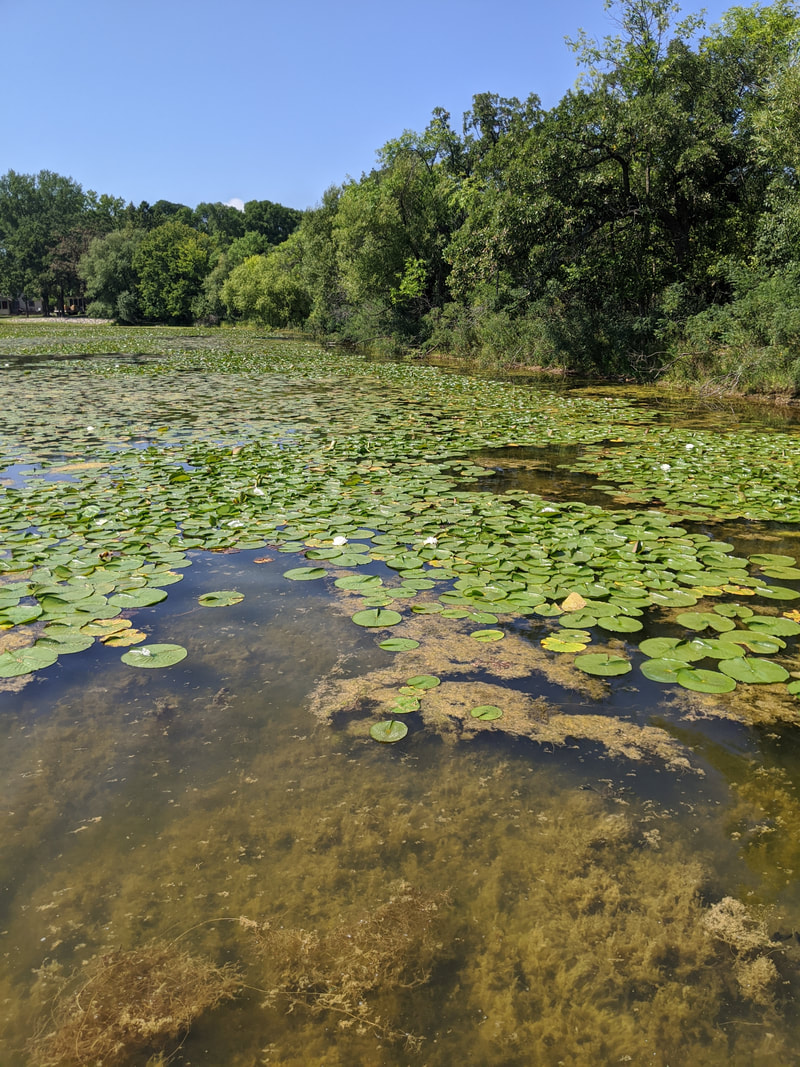
10-15-25  New paper out in Journal of Ecology looking at the potential interactions of multiple global change stressors. Using a latitudinal gradient as a proxy for future climate change we evaluated starry stonewort invasions across different climate conditions to look for potential interactions between invasions and climate change. This was another paper built on work started at the ERI at Indiana University that we are really proud to have out and we are honored to have been chosen to be included in the British Ecological Society Virtual Issue for Research, Policy and Perspectives for the IPBES. Also check out this blog post about our major findings.
​I am an ecologist broadly interested in the dynamics of major shifts in ecological communities, particularly in the context of anthropogenic influences on natural systems. Because ecological communities are fundamentally complex systems, to understand their dynamics I use a combination of observational studies, manipulative experiments, and theory development, which I synthesize through computational models of those systems. I believe that integrating empirical and theoretical methods is the best way to make progress in understanding complex systems because it provides the opportunity to understand the network of interconnected processes that control real ecosystems and evaluate the emergent properties of systems as a whole. I have conducted research in a number of systems from coral reefs to temperate lakes and midwestern agroecosystems and on a variety of basic and applied questions, check out my research projects to see the major things I'm working on. 

I am currently an Assistant Professor in the Department of Biology at St. Olaf College. 


Picture
Picture
Picture

News
10-15-25  New paper out in Journal of Ecology looking at the potential interactions of multiple global change stressors. Using a latitudinal gradient as a proxy for future climate change we evaluated starry stonewort invasions across different climate conditions to look for potential interactions between invasions and climate change. This was another paper built on work started at the ERI at Indiana University that we are really proud to have out and we are honored to have been chosen to be included in the British Ecological Society Virtual Issue for Research, Policy and Perspectives for the IPBES. Also check out this blog post about our major findings.

4-10-25 
 New paper out in Global Change Biology that reviews different strategies species you to respond to climate change in the framework of realigning the environmental conditions species experience with the optimal niche conditions. It was great to finally have this collaborative paper written with several fellows of the Environmental Resilience Institute at Indiana University come out. Also check out this write up about the study from the ERI.


3-28-25  We are hiring! The lab is currently looking for 2 Postdoctoral research associates to work on newly funded projects:

The first position is for a Social Scientist to study the Effectiveness of simulation-based modeling tools on stakeholder decision making in aquatic invasive species management. Key responsibilities will be to design and manage participatory modeling workshops and participant surveys to assess how stakeholders use and are influenced by decision support tools that allow them to explore different management strategies (further details and link to apply is here). 

The second position is for an Ecological Modeler to study the Evolutionary drivers and ecological consequences of dispersal plasticity in marine fish. Key responsibilities will be to design and analyze spatially explicit evolutionary and ecological models of dispersal plasticity in the clown anemonefish Amphiprion percula (further details and link to apply is here). 

Applications for both positions are currently being accepted at the St. Olaf HR website and will be reviewed on a rolling basis. We hope to have candidates hired by June 2025, though start date is negotiable. 


7-1-24  New papers in Ecological Modelling about a R package for working with NEON plant diversity data led by Adam Mahood  and in Conservation Biology on the AIS Explorer tool for evaluating aquatic invasive species risks across Minnesota led by Amy Kinsley

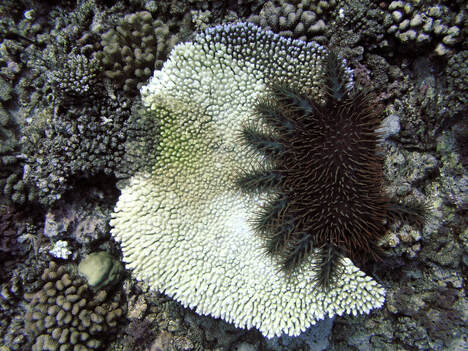
3-22-23  New paper continuing our work on habitat modifying positive feedback processes in coral reef ecosystems just published in Marine Environmental Research. 
​
1-30-23  Excited to announce our new project funded by MAISRC to continue our collaboration with the Leech Lake Band of Ojibwe to assess invasion risks and impacts of starry stonewort on Manoomin (wild rice) in lakes on the Leech Lake Reservation. 
​

11-08-22  The integrated ecology lab officially does social science now! See our new paper on stakeholder perspectives about starry stonewort management led by Abigail Sullivan in Environmental Science and Policy. 

5-08-22  I'm excited that MAISRC has funded our rapid response grant to study the effects of starry stonewort on manoomin (wild rice) and to help develop a monitoring program in collaboration with the Leech Lake Band of Ojibwe.  

3-23-22  A series of new papers are finally all out in Ecosphere stemming from a great workshop at CU Boulder about the National Ecological Observatory Network (NEON).  We discuss how NEON data can be used to study tipping points and regime shifts, invasions, and a whole bunch of other things. Also how NEON can increase access and equity in ecology by making large-scale, high-quality data publicly available to students and researchers anywhere.

7-10-21  New paper out in Ecology Letters from collaboration with NutNet looking at changes in species-area relationships under different nutrient and herbivory regimes. Excited for more NutNet projects coming soon!

5-15-21 New comment out in Ecology Letters evaluating the approach of Beaury et al. (2020) for identifying biotic resistance in large plant diversity data sets. The paper was critical of their methods, but I have to say they were incredibly gracious and I am excited to see their response. 


4-26-21 Back in the field! Ready to start our full summer sampling effort, with two new technicians (Laura Wagner and Ian Severns, both UMN alums), to look at the phenology and year-to-year changes in starry stonewort populations across lakes of the upper midwest. 

8-21-20 Despite Covid-19's best efforts to prevent us, we got in a quick field season sampling starry stonewort across the midwest. Preliminary impressions: native species are fighting back in 2020!

2-28-20 Our new paper looking at the implications of trait plasticity on the potential for species coexistence is out in Ecology Letters!
​
​2-10-20 New paper on the role of invasive species in the biotic homogenization of Minnesota lakes out in Global Ecology and Biogeography

1-21-20 New papers out! A review of the need to incorporate stochasticity into community ecology led by Lauren Shoemaker in Ecology and an experimental evaluation of desiccation tolerance of starry stonewort led by Wes Glisson in the Journal of Aquatic Plant Management. 

11-22-19 New paper out in the Journal of Experimental Marine Biology and Ecology from our work on the invasive seagrass Halophila stipulacea in the Caribbean and how it spreads so effectively. 

9-16-19 The 2019 field season is in the books! We figured out a lot of things, made some new friends, and raked up a whole lot of starry stonewort. Now it's time for analyzing all that data! If you want a peek at what our field work looks like, check out a transect here

8-16-19 The field work to conference transition with a 24 hour turnaround was exhausting but ESA was a great time. Particularly fun to get to travel with my amazing colleagues from the Environmental Resilience Institute. #ERIatESA was the best, cant wait for next year in Salt Lake City. 

7-30-19 We have a BOAT!!!

​7-15-19 The Integrated Ecology lab (aka Muthukrishnan Lab) is growing! Carolyn Kalinowski has joined us from Minnesota as a Lead Technician and Jordin Schubert will be working with us for the summer. We're off to track starry stonewort across the Midwest!

10-23-18  Check out our new paper in Biological Invasions on linking simulation-based
models and species distribution models to predict Miscanthus giganteus invasion
​risks across the entire United States

9-1-18 Just started a new position at the Environmental Resilience Institute at Indiana
University. Excited to explore Bloomington!

5-21-18 New paper out in PLoSOne looking at interactions between landscape
characteristics and invader traits in emergent invasion dynamics
Proudly powered by Weebly